Blog

Opening Times in Bratislava During Easter – What Should You Expect?

Are you planning an Easter getaway to the Slovak capital? You might be picturing yourself strolling through the Old Town, a freshly baked pastry in one hand and a souvenir magnet in the other. But then, the panic sets in. What if everything is closed? Will I be reduced to eating gas station crackers for three days? Is the city going to be a ghost town where the only thing moving is a tumbleweed shaped like an Easter bunny?

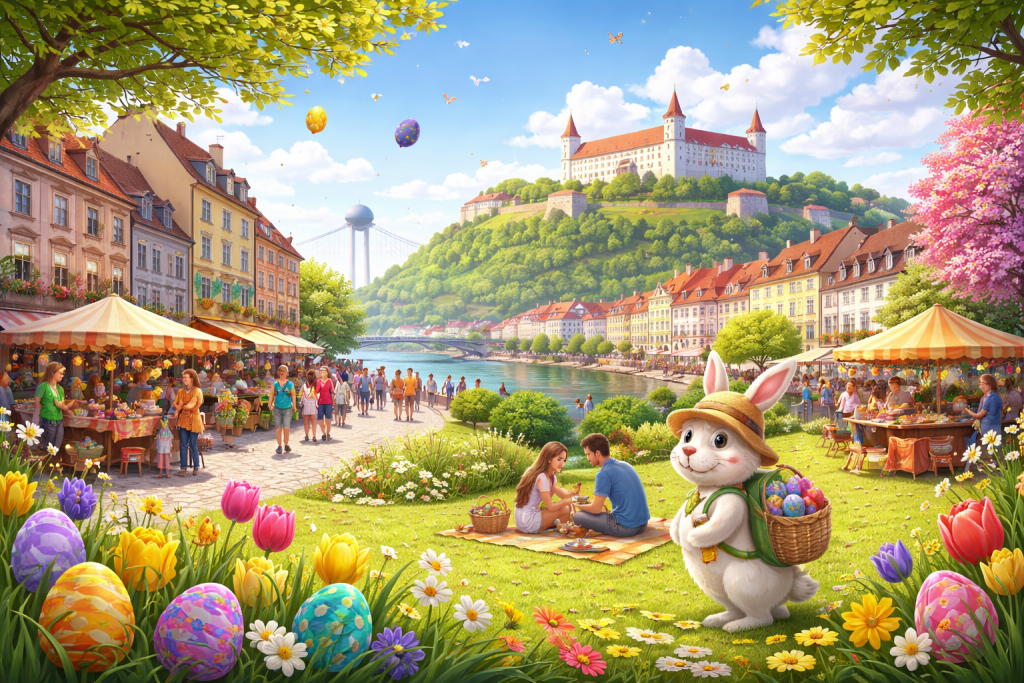
Take a deep breath. The reality is much nicer (and tastier). Bratislava during Easter is not a ghost town—but it does operate on a slightly different rhythm. With a bit of “eggs-pert” planning, you’ll have a great time.


🐣 Public Holidays: The Easter Calendar in Slovakia

In Slovakia, Easter is taken seriously—both culturally and legally. The key days to know are:

  • Good Friday (Veľký piatok): Public holiday
  • Easter Sunday (Veľkonočná nedeľa): Major religious day (shops closed)
  • Easter Monday (Veľkonočný pondelok): Public holiday

In addition, schools are closed for several days around Easter, meaning many locals travel or spend time with family. The city may feel a bit quieter—but not empty.

And yes… Easter Monday comes with the famous Slovak tradition of “watering” (men playfully splash women with water or perfume). Consider yourself warned 😄


🛍️ Shops & Supermarkets: What’s Open (and What’s Not)

Here’s the most important part—and where many travelers get caught off guard.

  • Good Friday, Easter Sunday, Easter Monday:
    👉 Almost all shops are closed by law
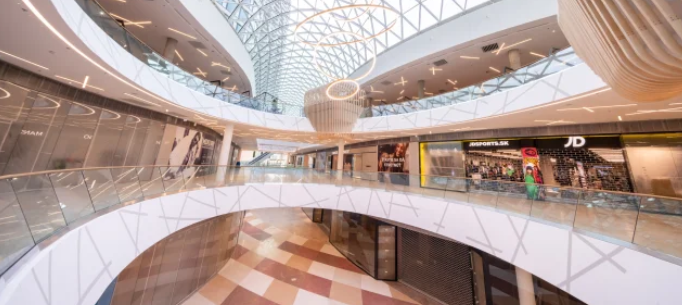
    👉 This includes supermarkets (Tesco, Lidl, Billa), shopping malls (Eurovea, Nivy, Aupark), and fashion stores
  • Easter Sunday note:
    Shops are always closed on Sundays in Slovakia anyway—so this is nothing unusual.
  • Saturday (the golden day):
    👉 Shops are open as normal
    👉 This is your moment to stock up on snacks, drinks, and anything you might need
  • Exceptions:
    👉 Gas stations (often with small shops)
    👉 Some pharmacies (limited opening hours)
    👉 Airport and train station shops

💡 Pro tip: Do your “survival shopping” on Saturday. Think of it as your Easter treasure hunt—but instead of eggs, you’re hunting for snacks.


🍽️ Restaurants, Cafés & Bars

Good news—you will not starve.

  • Most restaurants, cafés, and bars remain open, especially in the Old Town
  • Expect slightly reduced hours on holidays
  • Reservations can be a smart move, especially on Sunday

This means you can still enjoy Slovak classics like bryndzové halušky or relax with a coffee in the charming streets of the city center.

👉 For inspiration, check out the local tips and ideas on the Bratislava Guide


🌳 What to Do When Shops Are Closed?

Bratislava doesn’t shut down—it just shifts focus. Easter is actually a great time to explore the city differently.

🌿 Nature & Views

  • Walk in Sad Janka Kráľa (one of the oldest public parks in Europe)
  • Head up to Kamzík for fresh air and panoramic views

🏰 Bratislava Castle

  • The castle grounds are open year-round
  • Perfect for photos and Danube views

🚶 Old Town прогулка (yes, just wander!)

  • The historic center is beautiful, peaceful, and very walkable

👉 Discover more must-see places here: Top attractions in Bratislava


🏛️ Museums During Easter

Museums in Bratislava are generally open, but with possible adjusted hours.

  • Slovak National Museum – usually open
  • Bratislava City Museum – often open
  • Bratislava Castle exhibitions – typically accessible

⚠️ Always double-check opening hours for specific dates, especially on Good Friday and Easter Monday.

👉 Want to see what’s happening during your stay? Check: What’s happening in Bratislava


🌦️ Bonus Reality Check: The Weather

Easter in Bratislava is… unpredictable.

  • One moment: sunshine and sunglasses ☀️
  • Next moment: wind, rain, and “why didn’t I bring a jacket?” 🌧️

Pack layers. Always. Trust me.


🚄 Thinking About a Day Trip to Vienna?

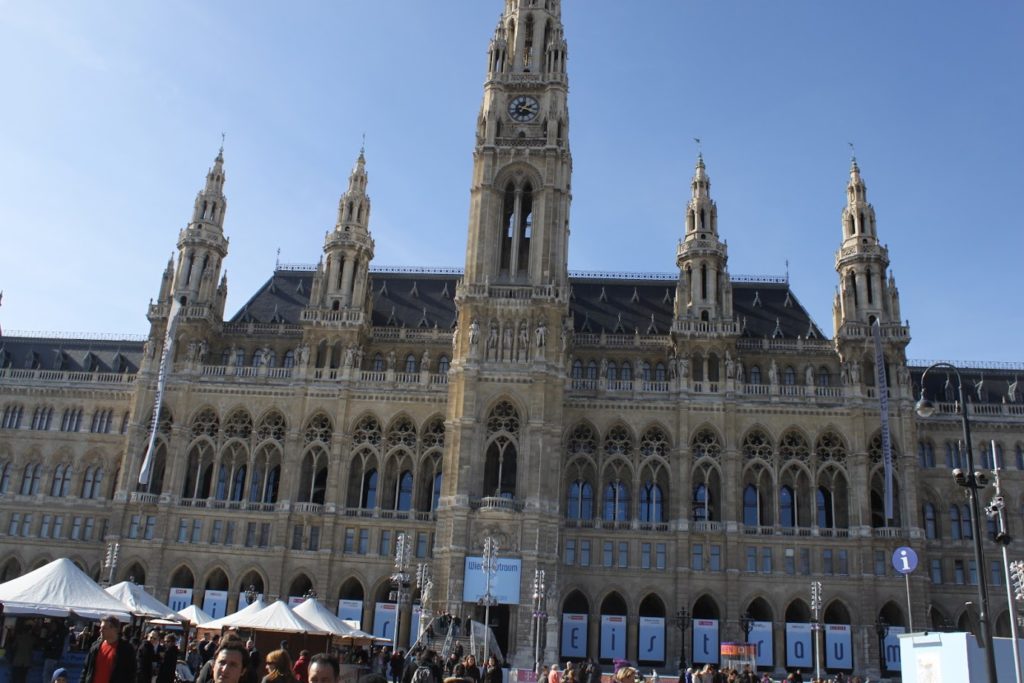
Bratislava is just about an hour from Vienna, making it tempting for a quick trip.

But here’s the catch:

So yes, Vienna is beautiful—but don’t expect a shopping paradise there either.


🐰 Final Tips

  • 🛒 Do your shopping on Saturday
  • 🍽️ Rely on restaurants during holidays
  • 🌳 Enjoy parks, views, and relaxed city vibes
  • 🌦️ Dress for all seasons
  • 💦 Be ready for Easter Monday traditions

Bratislava during Easter isn’t about shopping sprees—it’s about atmosphere, traditions, and slowing down a bit.

And honestly? That might be exactly what you didn’t know you needed.

Happy Easter! 🐣
Bratislava Aviation: Comparing the 2019 Benchmark with the 2024-2025 Recovery

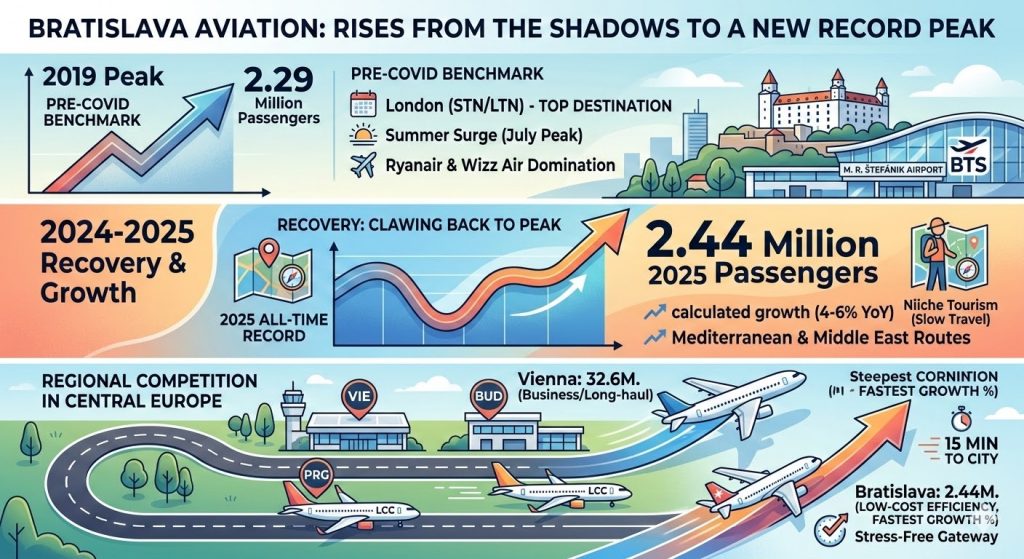
The landscape of Central European aviation has shifted dramatically over the last half-decade. For M. R. Štefánik Airport (BTS) in Bratislava, the journey from the pre-pandemic highs of 2019 to the current operational realities of 2024 and 2025 reveals a story of resilience, intense regional competition, and a strategic shift in how the Slovak capital markets itself to the world.

The 2019 Benchmark vs. The 2024-2025 Reality

In 2019, Bratislava was riding a wave of record-breaking expansion. The airport welcomed approximately 2.29 million passengers, fueled by a booming low-cost carrier market and a surge in city-break tourism. At that time, the trajectory seemed limitless. However, the global pause that followed necessitated a total reset of the aviation clock.

By 2024, the “recovery phase” transitioned into a “new normal.” Data from the past year shows that Bratislava has successfully clawed back the vast majority of its pre-COVID volume. While it hasn’t yet shattered the 2019 ceiling, the quality of traffic has evolved. We are seeing a 2025 landscape where passenger numbers are stabilizing around the 2-million mark, but with a higher percentage of year-round scheduled routes compared to the heavy charter reliance of five years ago.

According to the official Bratislava Airport traffic reports, the growth in 2025 is driven by a diversified portfolio of destinations, particularly strengthening ties with Mediterranean hubs and Middle Eastern connections that were less prominent in 2019.

The Regional Struggle: Fading or Flourishing?

The most common critique of Bratislava’s aviation sector is its proximity to Vienna International Airport (VIE). With Vienna located just 40 kilometers away, the competition is existential. While Vienna’s sky-high comeback and 2025 tourism boom attract the “Big Three” alliance carriers and massive long-haul hauls, Bratislava has had to find a different way to survive.

Similarly, Budapest and Prague have solidified their status as “Tier 1” European destinations, often leaving Bratislava out of the primary itinerary for trans-Atlantic travelers. However, Bratislava is not “fading”—it is specializing. While Vienna serves the global elite and long-haul business sectors, Bratislava has doubled down on being the most efficient, low-cost entry point into the Central European region.

Why Do People Choose Bratislava in 2025?

The reasons travelers choose Bratislava today differ slightly from the motivations of 2019. The city has moved beyond being just a “cheap alternative” to Vienna and has developed its own specific draws:

  • The “Stress-Free” Gateway: In an era of massive airport queues and lost luggage at major hubs, Bratislava offers an “in-and-out” experience. Travelers can often get from the plane to the city center in under 30 minutes—a feat nearly impossible in Prague or Budapest.
  • The Gateway to the Tatras and Beyond: For many, Bratislava is the starting point for Slovak nature tourism. The 2025 trend toward outdoor and sustainable travel has benefited Slovakia, with the capital acting as the primary logistical base for those heading to the Carpathian mountains.
  • Affordability in an Inflationary Market: As prices in Prague and Vienna soar, Bratislava remains one of the most budget-friendly capitals in the Eurozone. This economic reality continues to pull in the Gen Z and millennial demographic through 2024 and 2025.

Are Other Slovak Airports Growing?

While Bratislava handles the lion’s share of traffic, it is not a monopoly. The decentralization of Slovak aviation is a key part of the 2025 strategy:

  1. Košice (KSC): The star performer of Eastern Slovakia. Unlike Bratislava, which competes directly with Vienna, Košice has successfully attracted legacy carriers like LOT and Austrian Airlines, serving as a vital link for the burgeoning IT sector in the east.
  2. Poprad-Tatry (TAT): This airport remains a niche player, primarily welcoming winter sun-seekers and hikers. Its 2024-2025 numbers show a high dependency on seasonal charters, yet it remains an essential asset for High Tatra tourism.
  3. Piešťany (PZY): Though much smaller, this airport has found success in the “health tourism” sector, bringing in visitors specifically for the world-renowned spa treatments in the region.

Conclusion: A Smarter Kind of Growth

Comparing 2019 to the 2024-2025 period shows that Bratislava has traded “raw volume at any cost” for “strategic, sustainable growth.” It may not be the giant of the Danube, but it has proven that there is a significant market for a capital city that is accessible, affordable, and human-scaled.

As we look toward the remainder of 2025, the influx of passengers suggests that Bratislava has successfully navigated the shadow of its larger neighbors, carving out a permanent—and growing—place in the Central European sky.

Exploring Bratislava on Foot – A Brutally Honest Conversation Between Two Fit Pensioners and a Very Worried Teenager

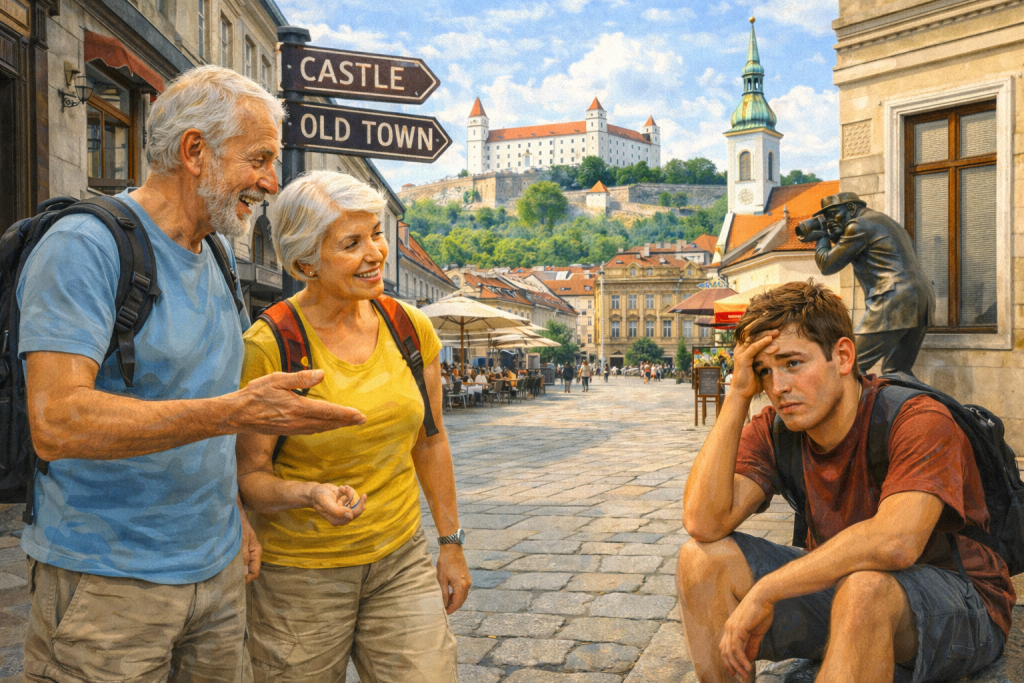
The sun is shining over the cobblestones of Bratislava’s Old Town. Grandpa (72) is adjusting his pedometer with the intensity of a NASA engineer. Grandma (69) is doing light lunges next to a medieval fountain. Leo (16) is leaning against a centuries-old wall, staring at his phone with the look of a man sentenced to a long-distance pilgrimage.


1. The Opening Scene: “Define ‘Everywhere'”

Leo: “Okay, I’ve checked the map. We’re in the Old Town. Can we just… stay here? For the whole day? Within a 100-meter radius of this gelato shop?”

Grandpa: “Don’t be ridiculous, Leo. We’re exploring Bratislava on foot. It’s compact! It’s healthy! My new knee hasn’t even started clicking yet. It’s hungry for mileage.”

Grandma: “Exactly, dear. Is Bratislava walkable? It’s more than walkable; it’s a gift to the calves. We’re going to walk to the Castle, then down to the Blue Church, then maybe a quick loop around the Danube.”

Leo: “I feel like you’re using the word ‘quick’ as a psychological weapon. Define ‘everywhere.’ Does ‘everywhere’ involve hills? Because my sneakers are purely aesthetic, they aren’t built for elevation.”


2. The Trek to Bratislava Castle: Cardio or “Warm-up”?

Leo: “Wait. You want to go up there? To the Castle? That looks like it’s in a different zip code. And it’s vertical!”

Grandpa: “It’s a 15-minute stroll, Leo. Maybe 1 kilometer from the Main Square. It’s barely a warm-up.”

Leo: “One kilometer uphill is ten kilometers in flat-earth distance. I’ve done the math.”

The Reality Check: Walking distances in Bratislava are famously deceptive. To get from the Main Square (Hlavné námestie) to Bratislava Castle, you’re looking at about 900 meters to 1.1 km depending on the path.

  • The Route: You can take the stairs near the UFO bridge underpass (intense) or the winding, paved slopes of Zámocká street (gentle).
  • The Time: 15–20 minutes.
  • The Verdict: It’s a slight incline, but the panoramic views of the Danube are the ultimate reward.

Grandma: “Look at the view, Leo! You can see all the way to Austria. Aren’t you glad we didn’t take a bus?”

Leo: (Heaving) “I… can see… my own soul… leaving my body. Give me five minutes. And a portable fan.”


3. The Christmas Markets: When 200 Meters is “Too Far”

Grandpa: “Now, let’s head back down to the Christmas markets. There’s one in the Main Square and another just a few steps away in Hviezdoslav Square.”

Leo: “Wait, another square? Is there a shuttle? An Uber? A donkey?”

Grandma: “Leo, it’s literally 200 meters. You could fall over and land in the next square. Bratislava Old Town walking is essentially just moving from one beautiful plaza to another.”

Leo: “My step counter says I’ve already done 3,000 steps. In my culture, that’s a marathon.”

Grandpa: “In my culture, that’s what we do before breakfast to check if the mail has arrived.”


4. Accidental Fitness: The Statue Scavenger Hunt

Grandma: “Oh! Look! It’s the man peeking out of the ground—Čumil! And there’s the Paparazzi statue around the corner!”

Leo: “Why is he in a sewer? Actually, I relate to him. He’s sitting down. He’s my hero.”

Grandpa: “Notice how we’ve spent the last hour exploring Bratislava on foot without even realizing it? We’re just wandering, looking for statues, and suddenly we’ve covered the entire historic center.”

Leo: “I realized it. My shins realized it. This is ‘accidental fitness,’ and I’d like to file a formal complaint.”


5. Do You Actually Need Public Transport in the Old Town?

Leo: “I see a tram. It’s red. It’s beautiful. It has seats. Why are we not on the red-seated-freedom-machine?”

Grandpa:Do you need public transport in Bratislava? Well, if you’re staying in the Old Town, the answer is a hard ‘No.’ The whole center is a pedestrian zone. Trams go around it, but walking through the middle is the only way to see the hidden courtyards.”

Grandma: “Besides, the trams are for going to places like the Zoo or the Zlaté Piesky lake. Here, your feet are your best friends.”

Leo: “My feet and I are currently in a toxic relationship. We aren’t speaking.”


6. When Walking Stops Being Fun: The Reality Check

Grandpa: “Alright, I’ll admit it. If we wanted to go to the Kamzík TV Tower or the Danubiana Art Museum, we’d take a bus or a boat.”

Grandma: “Correct. Bratislava has a fantastic, affordable public transport system. You just buy a ticket—usually a 30-minute or 60-minute one—at the orange machines or via the app. It’s cheap, clean, and saves the knees when you’re leaving the city center.”

Leo: “So there is a limit? There is a point where the walking ends?”

Grandpa: “Yes. When we leave the Old Town. But for now, we’re walking to the Blue Church.”

Leo: “Is it far?”

Grandma: “800 meters.”

Leo: “Tell my story. I’m staying here with the sewer man.”


7. The Verdict: Who Won the Argument?

By the end of the afternoon, the trio is sitting at a cafe near the National Theatre.

  • The Pensioners: Have clocked 12,000 steps. They are currently discussing taking a “leisurely stroll” across the SNP Bridge to see the park on the other side.
  • The Teenager: Is slumped in a chair, but has accidentally taken 45 photos of the city and secretly admitted that the Castle view was “actually kinda fire.”

Is Bratislava walkable? Absolutely. It is one of the most compact capitals in Europe. If you are staying within the tourist areas, you will likely never need a ticket for a bus or tram. The distances are short, the sights are dense, and the city is built for human scales—not car scales.

Grandpa: “Ready for one more loop around the city walls, Leo?”

Leo: (Dramatic sigh) “Only if there’s a pastry at the end of it. And I’m being carried.”

Grandma: “He’ll be fine. If two pensioners with titanium joints can outwalk a teenager, Bratislava might just be the perfect walking city.”

Free Museums and Activities in Bratislava – How to Explore More Without Wasting Money

Let’s get one thing straight: you aren’t here because you’re broke. You’re here because you have a functional brain and a healthy disdain for tourist traps. There is a specific kind of annoyance that comes from paying €15 to enter a museum, only to realize the most interesting thing in the building was the architecture you could have photographed from the sidewalk for free.

Bratislava is a city that rewards the savvy. It’s small, walkable, and packed with history that hasn’t all been locked behind a paywall yet. You can absolutely spend €7 on a mediocre latte in the center of the Main Square (Hlavné námestie), or you can walk five minutes, find a hidden courtyard, and see a 15th-century stone carving while sipping a superior coffee for half the price.

Free doesn’t mean miserable; it means you’re playing the game better than everyone else. Here is how to conquer Bratislava without bleeding cash.


1. Museums in Bratislava: The Paywall Logic

In most European capitals, museum-hopping is an Olympic sport for your wallet. In Bratislava, the pricing is generally more reasonable, but the costs still add up if you aren’t careful.

What does it usually cost?

Standard museum entry in Bratislava typically falls into these buckets:

  • The “Quick Peek” (€2–€4): Small, niche galleries or climbable towers.
  • The “Standard” (€6–€9): Most city-run museums and historical exhibitions.
  • The “Tourist Special” (€10+): Large-scale national galleries or comprehensive castle tours.

How to get in for free

If you want to see the “Big Stuff” without the bill, you need to time your visit. Unlike some cities that have abandoned the concept of “free days,” Bratislava still plays ball.

  • The First Wednesday of the Month: This is the golden rule. Many national museums (under the Slovak National Museum umbrella) offer free admission on the first Wednesday of every month. This includes the Interior of Bratislava Castle and the Natural History Museum.
  • National Holidays: Dates like January 1st (Day of the Establishment of the Slovak Republic) or July 5th (St. Cyril and Methodius Day) often see certain cultural sites opening their doors for free.
  • Bratislava City Days: Usually held in late April, the city essentially throws a giant “open house,” with free entry to almost all city-managed museums and historical sites.

2. The Regional Reality Check: Bratislava vs. The Neighbors

When planning a Central European loop, it’s helpful to know where Bratislava sits on the “Value for Money” scale.

  • London: The gold standard. Most major museums are free 365 days a year. It’s a cultural luxury that spoils travelers for life.
  • Prague: The opposite. Prague has become increasingly conservative with free entries. While it’s stunning, you’ll find yourself reaching for your card for almost every interior. If you’re heading there next, check out this guide on how to experience Free Prague to save your budget for the beer.

Where does Bratislava sit? Right in the “Sweet Spot.” It isn’t as wide open as London, but it’s far more generous and less “taxing” than Prague. It’s a city where you can see 80% of the charm without spending a cent, provided you like to walk.


3. Top Free Things to Do in Bratislava

If you want to maximize your experience while minimizing receipts, focus your energy on these highlights.

Walking the “Scavenger Hunt”

Bratislava’s Old Town is an open-air museum. You don’t need a ticket to admire the Gothic architecture of the Old Town Hall or the pastel-colored mansions.

  • The Statues: Looking for the quirky bronze statues is a mandatory (and free) activity. Find Čumil (the Man at Work) peeking out of a manhole, or the Paparazzi statue. It’s a low-stakes scavenger hunt that takes you through the most photogenic alleys.
  • Blue Church (Modrý kostol): About a 10-minute walk from the center, this Art Nouveau masterpiece looks like it was made of Smurf-colored icing. It costs nothing to admire from the outside (which is the best part anyway).

The Castle Ascent

You’ll see Bratislava Castle looming over the city. While the interior exhibitions require a ticket (unless it’s that first Wednesday), the grounds are entirely free.

  • The Courtyards: You can walk right into the main courtyard and the Baroque gardens.
  • The View: This is arguably the best panoramic view of the city, the Danube, and the “UFO” bridge. If the paid exhibition only offers a 10% better view from a higher window, why pay?

The Green & The Blue

Bratislava is defined by the Danube.

  • The Riverbank: The Eurovea promenade is a modern, grassy stretch along the river perfect for people-watching.
  • Sad Janka Kráľa: Cross the bridge to one of the oldest public parks in Central Europe. It’s massive, atmospheric, and the perfect place to escape the tourist crowds.

4. Is the Paid Stuff Worth It?

We aren’t advocates for missing out just to save five Euro. Some things are worth the price of admission—if you value them.

ActivityPrice (Approx)Is it worth it?
UFO Observation Deck€12+Only if you’re a photography fanatic. Otherwise, the Castle view is free.
Michael’s Gate Tower€6Worth it for the view of the Old Town rooftops and the small weapon museum.
National Gallery (SNG)€10Recently renovated and stunning. If you love modern art, it’s a “Yes.”

The Logic: If a paid site offers an experience you can’t replicate for free (like a 360-degree view from a tower or a specific historical artifact), pay the fee. If it’s just “more of the same,” keep your money for a better dinner.


5. Smart Budget Strategy for Bratislava

To master Bratislava on a budget, follow these three rules:

  1. Walk the History, Pay for the Niche: Use your feet to see the Castle, the Blue Church, and the Old Town. Save your “entry budget” for something truly unique, like the Pharmacy Museum or the Museum of Clocks.
  2. The “Two-Block” Dining Rule: Never eat on the main square. Walk two blocks into the side streets (like Kapitulska or Panenská). The prices drop by 30%, and the quality of the food usually doubles.
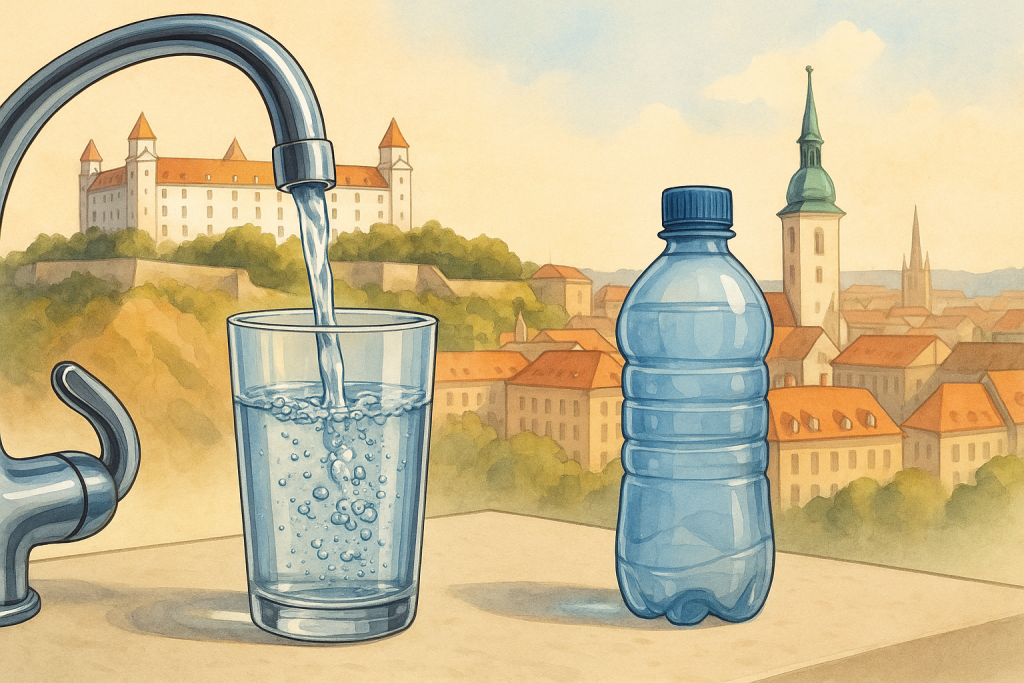
  3. Water is Free: The tap water in Bratislava is some of the best in Europe. Bring a reusable bottle and skip the €3 plastic bottles at the kiosks.

The Final Verdict

Bratislava rewards curiosity more than it rewards cash. It is a city of hidden courtyards, quiet riverbanks, and hilltop views that don’t require a swipe of a credit card. You don’t have to avoid spending money here—you just have to avoid spending it badly.

By prioritizing free museums in Bratislava and focusing on the city’s natural and architectural highlights, you’ll leave feeling like you’ve actually seen the place, rather than just seen the inside of its gift shops.

Tap-water in Bratislava. Safe?

Staying hydrated is one of the most important things you can do for your health, no matter where you travel. Our bodies are made up of more than 60% water, and dehydration can cause fatigue, headaches, dizziness, and reduced concentration. Health experts generally recommend drinking between 2 and 2.5 liters of fluids per day for adults, though this amount can vary depending on your activity level, body size, and the climate. When you’re walking around Bratislava on a hot summer’s day, with the sun shining and temperatures often reaching well above 30 degrees Celsius, that recommendation becomes even more crucial. Sweating all day drains your body of fluids and electrolytes, so replenishing them is essential to feel good and enjoy your trip.

Is tap water in Bratislava safe to drink?

One of the most common questions for travelers is whether it’s necessary to buy bottled water when visiting a new city. The good news is that in Bratislava, you can safely drink the tap water. Slovakia is known for having excellent water quality, thanks to its underground springs and strict regulations. Whether you’re in your hotel room, a rented apartment, or dining at a local restaurant, the tap water is safe and clean.

Of course, if you prefer bottled water, you’ll find it everywhere. Shops and supermarkets sell a wide variety of both still and sparkling mineral waters. In fact, Slovakia has a long tradition of mineral water consumption, and many of the brands you’ll see come from natural springs within the country. That said, constantly buying bottled water is neither necessary for your health nor ideal for the environment. Refilling your bottle straight from the tap is cheaper, eco-friendly, and perfectly safe.

Hydration made easy in summer

In the heat of a Bratislava summer, staying hydrated can be tough. Walking around the Old Town, climbing up to Bratislava Castle, or cycling along the Danube can leave you feeling drained. To keep up, it’s wise to always carry a reusable water bottle. Some hotels and apartments even provide filtered water stations, but even ordinary tap water is just fine.

What if you want to drink something else?

While water is the healthiest choice, sometimes you may crave variety. Luckily, Bratislava offers plenty of options when it comes to refreshing drinks.

Kofola – This is Slovakia’s answer to Coca-Cola, a beloved soft drink that originated in the former Czechoslovakia. It has a less sweet taste than cola and a unique mix of herbs and spices. Many locals prefer Kofola to international sodas, and it’s available both on tap and bottled.

Beer (Pivo) – Slovakia is a beer-loving country, and Bratislava is no exception. You’ll find a wide selection of local beers, both light and dark, in pubs and restaurants. Slovak lagers are crisp and refreshing, perfect for a hot summer’s evening. Popular brands include Zlatý Bažant and Šariš, and there’s also a growing craft beer scene with microbreweries offering unique flavors.

Wine – The wine culture in Slovakia is also worth mentioning. The Small Carpathian wine region stretches just north of Bratislava, producing excellent white wines such as Grüner Veltliner and Riesling. During summer, you can try a chilled glass of local white wine or even spritzers (wine mixed with soda water), a popular way to stay cool.

Herbal teas and syrups – Slovaks often enjoy herbal teas (bylinkový čaj), made from chamomile, mint, linden blossom, or other local herbs. In warmer months, syrups (sirupy) diluted with sparkling or still water are also popular. These are often homemade and come in flavors like elderflower, raspberry, or blackcurrant.

Spirits – For those looking for something stronger, Slovakia is known for its traditional spirits. Borovička (juniper brandy) and slivovica (plum brandy) are cultural staples, though they’re not exactly thirst-quenchers. Still, they are part of the local experience and worth a try in moderation.

Coffee – Bratislava has a thriving café culture, so if you’re looking for a pick-me-up, you’ll find excellent espresso, cappuccino, or iced coffee options across the city.

Final thoughts

In Bratislava, drinking enough water should be the least of your worries. Tap water is safe, clean, and tasty, making it unnecessary to rely solely on bottled alternatives. Carrying a reusable bottle will keep you hydrated as you explore, especially on warm days when the Danube glitters under the summer sun and temperatures rise above 30 degrees.

At the same time, Slovakia’s drink culture offers plenty of alternatives when you’re in the mood for something different. From the herbal taste of Kofola to the crispness of Slovak beer or the freshness of local wines, you’ll always find a way to quench your thirst in style. So, drink up—whether from the tap or a glass of something uniquely Slovak—and enjoy your time in Bratislava to the fullest.

For more tips about the city and its highlights, check out the Bratislava Guide, explore Bratislava attractions, and see what’s happening in Bratislava during your stay.

Post Malone, OneRepublic, Becky Hill, and Clean Bandit Head to Lovestream Bratislava 2025

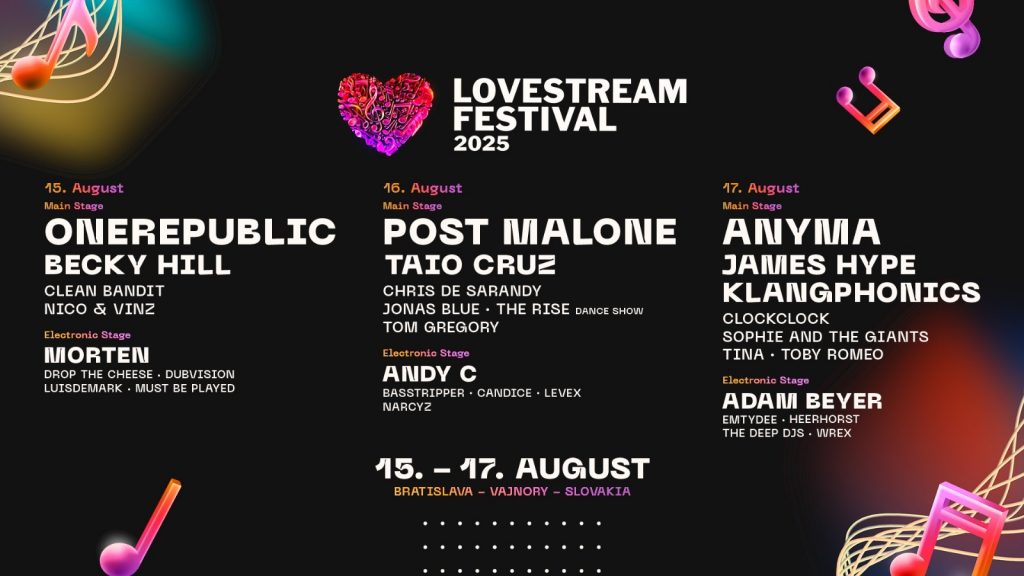
Summer 2025 is set to be unforgettable for music fans in Central Europe, and Lovestream Festival in Bratislava is shaping up to be the crown jewel of the season. From 15–17 August 2025, some of the world’s biggest music stars — including Post Malone, OneRepublic, Becky Hill, and Clean Bandit — will take the stage at Staré Letisko Vajnory, the festival’s spacious open-air venue just outside the Slovak capital.

After a record-breaking summer in 2024, Lovestream is back and bigger than ever. For many fans, it will be the event of the year — the perfect mix of global talent, electric energy, and summer celebration.


Summer Stars: From Sziget to Lovestream

Some of the Lovestream 2025 artists will be heading to Bratislava straight from Sziget Festival in Budapest, one of Europe’s largest festivals held earlier in August. You can read more about that event here.

Post Malone, for example, is performing at Sziget before arriving in Bratislava to headline Lovestream, bringing with him global hits like Sunflower, Circles, and Chemical. Meanwhile, artists like Becky Hill and Clean Bandit are not on the Sziget 2025 program — so Lovestream offers fans a unique chance to see them live this summer.

Whether you’re continuing the party after Budapest or skipping the Hungarian crowds in favor of a different vibe, Lovestream Festival delivers a fresh, top-tier experience.


The Lovestream 2025 Lineup

Lovestream’s 2025 artist list spans genres from pop and dance to rock and electronic, with world-class talent and energetic performances guaranteed.

Main Acts Announced So Far:

  • Post Malone – A genre-bending superstar blending rap, rock, and pop.
  • OneRepublic – The globally loved band known for Counting Stars and Apologize.
  • Becky Hill – A rising queen of dance-pop, beloved for her powerhouse vocals and infectious energy.
  • Clean Bandit – The British group famous for fusing classical instruments with electronic beats in tracks like Rather Be and Symphony.

Also on the 2025 roster:

  • MORTEN, DubVision, Heerhorst, Basstripper, and more — bringing late-night vibes to the festival’s dedicated electronic stage.

More acts are expected to be announced as the festival approaches.


A Look Back: Lovestream Festival 2024

Lovestream 2024 was a major success, drawing tens of thousands of fans to Bratislava. The lineup featured some of the biggest names in hip-hop, pop, and EDM, including:

  • 50 Cent, who brought classic hits like In Da Club to the Friday crowd
  • Macklemore, delivering an energetic and crowd-pleasing Saturday performance
  • Rita Ora, Tom Walker, Calin & Viktor Sheen, and Ray Dalton
  • Tiësto, who closed the weekend on Sunday with a spectacular DJ set
  • Other highlights: Chase & Status, Rosa Linn, FAST BOY, Tujamo, and The Kolors

The festival was praised for its strong organization, diverse lineup, and energetic atmosphere — helping Lovestream secure its place as one of Slovakia’s premier music events.


Don’t Miss the Highlight of Summer 2025

Whether you’re dancing to Post Malone under the stars, singing along with OneRepublic, or discovering your next favorite artist on the electronic stage — Lovestream Festival is where you’ll want to be this August.

Looking for more information? Check out the full event guide here:
👉 Lovestream Festival

Have a beautiful summer — and see you soon in Bratislava!

Parking in Bratislava – All you need to know!

Would you like to park your car during your trip to Bratislava? Are you traveling from Germany, Norway, Sweden, Italy, Hungary, or some other country and you need to park your car in a safe place during your hours or days in Bratislava? Where are the best places to leave your car in Bratislava? How much does it cost? How can I pay normal parking fees in Bratislava? This article is your ultimate guide to parking your car during your trip to Bratislava.

It can be frustrating to park your car as you arrive to a city. Less than an hour from Bratislava you have the city of Vienna, a place where you are only allowed to park your car for two hours at max on the street in the short-term parking zone that covers most of the central parts of the city. Compared to that, parking in Bratislava is a dream. You should absolutely check with the place you stay (hotel or apartment) and find out whether they provide free or cheap parking. But, if you find the parking the accommodation offer you to be too expensive, this is what you need to know about parking your car in Bratislava.

Parking your car on the street in Bratislava.

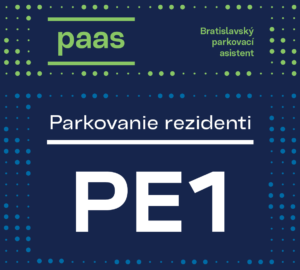
There are some areas in the inner city where only residents are allowed to park. You should not park at such a location. The sign you will see at such location is a blue sign saying “Parkovanie Rezidenti – PE1“. You can see the sign below.

parkvanie rezidenti bratislava

If you see the sign, find somewhere else to park. It is often tempting to park at such locations, because there are lots of free spaces, but don’t fall for the temptation. Go somewhere else instead!

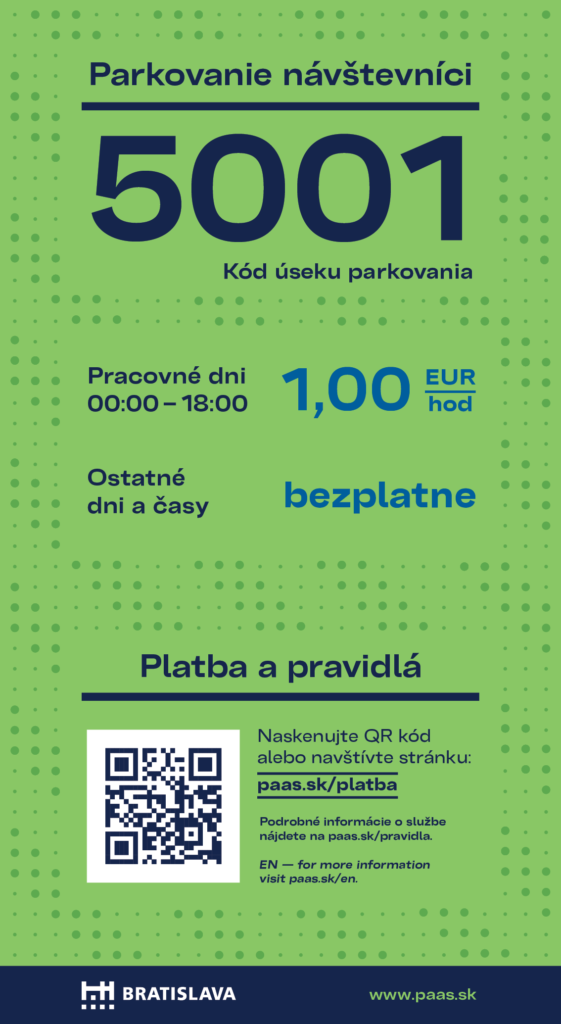
There are lots of parking zones in Bratislava where you are allowed to park, and they are marked with a green sign like the one you can see below. As you can see, it shows clearly the time frame for which you need to pay for the parking, and it also shows you the price (€1 per Euro).

parkovanie navstevnici bratislava

You can also see the code of the parking area, something you need to use if you will pay for the parking using the mobile application. You will also see a QR code that will take you to an application you can need to pay for the parking in Bratislava.

How can I pay for parking on the street?

There are parking machines where you can buy ticket, and that works well if you only want to park for a few minutes or an hour or two. But, if you want to park your car for several hours, and possibly renew the parking without having to return to the car, the mobile application for parking is by far the easiest and the best solution.

To pay for parking in Bratislava using a mobile app, we recommend using either PAAS (the official app of the parking company), EasyPark, or Ubian. If you have traveled in other parts of Europe, you might already have EasyPark installed on your cell phone, so then that might be the easiest solution.

As you use the application, you must enter the parking zone you are in (or at least check that the app has registered you in the correct zone based on your GPS location), and then you can start the parking. Do not forget to renew the parking if it should expire, and pay close attention to for which period you must pay for the parking, and for how long you can maximum stay in a zone with one parking.

How much does it cost to park on the street in Bratislava?

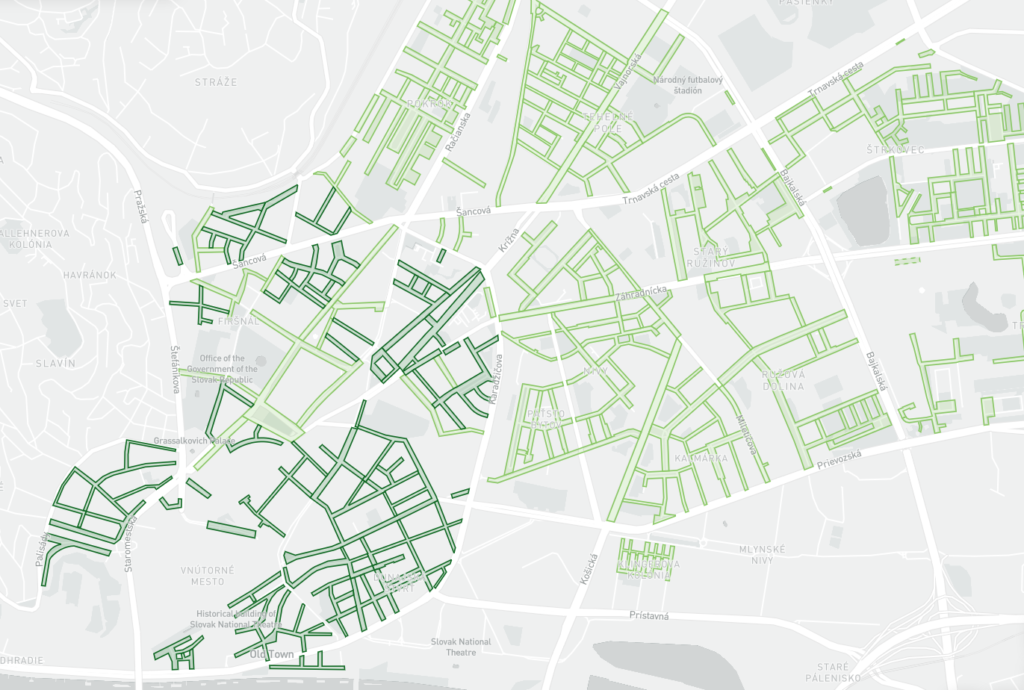
Below you can see a map showing the different parking zones in Bratislava. The areas colored with dark green are the most expensive, and here you must pay €2 per hour during the hours where parking fees must be paid (normally between 8:00 and 24:00). Some of them only require you to pay such fees during weekdays, while other places you must pay parking between 8:00 and 24.00 on all days of the week.

bratislava zone map parking

In the areas with light green color the parking fees vary between €0,5 and $1,5 per hour. Most of these places only ask you to pay for parking on weekdays between 8:00 and 24:00. The Danube is located at the bottom of the map (barely visible). You can see the Slovak National Theatre in the middle of the map (at the bottom), a very famous building in the center of Bratislava.

Now you should have a fairly good feeling about what it is like parking on the streets of Bratislava. It is also useful to know that the map above also shows you clearly where you are allowed to park and not. In other words, the streets you can see in the map above all portray streets where you are allowed to park (if you pay).

I would like to park somewhere else… maybe in a shopping center?

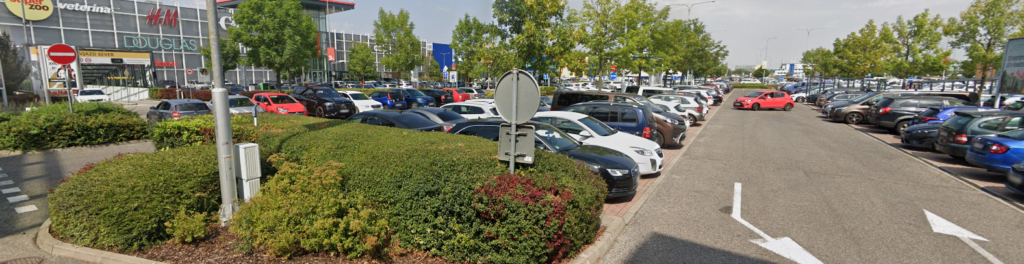
Would you like to park indoor? There are several shopping centers in Bratislava where you can park your car. The most central shopping center is Eurovea, and here you can park your car easily. The first three hours are free on weekdays and the first five hours are free during weekends. After that, the price per hour is €3,5. Here you can also park your car for some hours of sightseeing in Bratislava, do some shopping, walk into the old town, and then return to Eurovea to pick up your car afterward.

eurovea
Eurovea is good both for shopping and parking…

If you are willing to park a little bit further away from the center, then the biggest shopping mall in Bratislava is Avion Shopping Park. This is located next to an IKEA store and parking here is completely free. Here you can leave your car for a longer time without paying anything. Of course, many people are worried about leaving your car unattended for several days, but it is possible. You can travel to the city center from Avion Shopping Park using bus number 61.

A third option is the Aupark Shopping Center. This is closer to the city center, just on the other side of the Danube (compared to Bratislava Castle and the old-town). This big mall has several parking lots with different names. Two of the parking areas are free to use, and one of those even having charging ports for Tesla’s (P3).

free aupark parking

It is free to park from Monday to Sunday in the P3 and the P5 area of the Aupark shopping mall. And yes, you can also charge your Tesla in the P3 area. If you want to use the other parking areas in Aupark (P1, P4, P7), then it uses the same system as Eurovea, meaning you can park for free for three hours on weekdays and 5 hours on weekends, and that you must pay €3 per extra hour after the free hours.


We hope this information will help you park your car nicely in Bratislava without any worries. If you still have any comments or questions, please write them below in the comment field.

Slovakia or Sweden? That is the question!

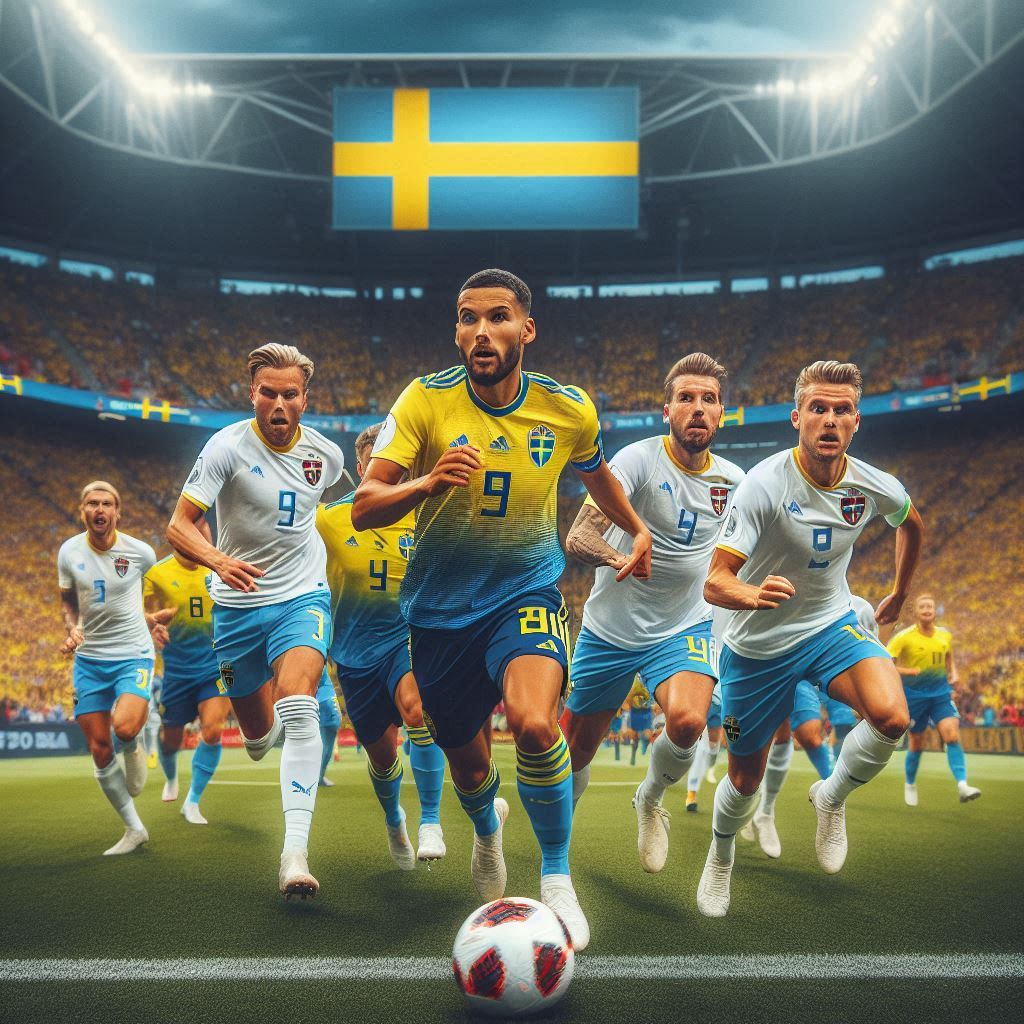
A few weeks ago, the Swedish national team in football came to Bratislava to play against Slovakia at Tehelné Pole, the home field of the football club Slovan Bratislava. After 40 minutes, Sweden was in the lead with 2-0 after goals scored by Ayari and Sema. But, as the match reached 90 minutes, the result was 2-2 and both nations got 1 point each. As a result, whether it will be Slovakia or Sweden winning the group depends on the outcome of the match in Stockholm at Friends Arena on November 16.

During the European Championship in 2020 (2021), Sweden won 1-0 against Slovakia. In other words, Sweden has a good tradition when it comes to at least getting one point or winning against Slovakia. But, that doesn’t have to mean anything, because everything comes to an end one time or another.

The math is quite easy. If Slovakia wins the match against Sweden, Slovakia will win the group and get a better chance at reaching the World Championships in football. If Sweden wins the match, then Sweden gets a better chance at reaching the World Championships in football. If they play a draw, then the final matches of both teams will be what decides which team will win the group.

In Sweden, the TV channel TV4 will broadcast the match between Sweden and Slovakia at Friends Arena, while RTV/AMC has the broadcasting rights in Slovakia. You can read more on the topic of watching Nations League and other content on TV4Play outside Sweden at https://www.svensktvutomlands.com/.

Will Sweden or Slovakia win on November 16?

I asked ChatGPT for a prediction, and the conclusion of a long text was the following:

Given Sweden’s historical strength and home advantage, they might be favored to win. However, Slovakia has the potential to pull off a surprise, especially if they defend well and capitalize on counterattacks. Overall, Sweden might be the slight favorite, but Slovakia could make it a close contest, depending on the dynamics closer to the match date.

I don’t really know for sure, but I do keep Sweden as favorites to win the match, first of all because of their advantage with the home field. But, since we are a Bratislava Guide, we cheer for Slovakia and we hope that all the key players will be at their best and make sure that Slovakia gets back into Nations League level B once again.

It is obvious that Slovakia needs to stop Alexander Isak and Viktor Gyokeres, as the players have scored seven goals in total during the recent four Nations League matches. That is a lot.

David Strelec is the only player with three goals in the Slovakian squad, but if he is at his best together with Ondrej Duda, then Slovakia will cause big trouble for Sweden.

Five Books that will bring Bratislava to Life Before You Arrive.

As you prepare for your upcoming trip to Bratislava,, why not enjoy the city’s history, culture, and atmosphere through the pages of literature? Bratislava’s captivating blend of old-world charm and modern vibrancy has inspired numerous authors to set their stories within its cobblestone streets, historic landmarks, and picturesque landscapes. Here are five books that will transport you to the heart of Bratislava and deepen your connection to this enchanting city.

Five interesting books about Bratislava.

  1. “The Good Soldier Švejk” by Jaroslav Hašek:
    Step into the comedic world of Jaroslav Hašek’s iconic character, Švejk, as he navigates the absurdities of war and bureaucracy in early 20th-century Bratislava. This satirical masterpiece offers a humorous yet insightful portrayal of life in the Austro-Hungarian Empire, with Bratislava serving as a backdrop for Švejk’s misadventures and witty observations.
  2. “The Glass Room” by Simon Mawer:
    Set against the backdrop of pre-World War II Bratislava, “The Glass Room” follows the lives of a wealthy Jewish couple who commissioned the construction of a modernist villa designed by architect Ludwig Mies van der Rohe. As political tensions rise and the shadow of war looms, the villa becomes a symbol of both aspiration and vulnerability, reflecting the city’s tumultuous history and the resilience of its inhabitants.
  3. “Samuel’s Story” by Mark Childress:
    In this gripping novel, Bratislava becomes a city of intrigue and espionage as American journalist Samuel journeys to Slovakia in search of his family’s roots. As he delves into the mysteries of his past, Samuel uncovers a web of secrets that intertwine with the city’s tumultuous history, from the Nazi occupation to the Communist regime, offering a compelling glimpse into Bratislava’s complex identity.
  4. “In the Shadow of the Castle” by Rebbeca Goldstein:
    Rebbeca Goldstein’s captivating novel transports readers to Bratislava’s Jewish quarter during the tumultuous years of the Holocaust. Through the eyes of protagonist Lena, a young Jewish woman forced into hiding, we witness the courage and resilience of Bratislava’s Jewish community as they confront persecution and strive to preserve their heritage amidst unimaginable adversity.
  5. “Bratislava: A City in Poems” edited by Alexandra Büchler:
    Experience the beauty and diversity of Bratislava through the eyes of its poets in this enchanting anthology. From medieval legends to contemporary reflections, these poems capture the essence of the city’s landscapes, architecture, and people, offering a lyrical journey through Bratislava’s past and present.

You can buy these and lots of other books at


As you read these literary works, you’ll gain a deeper appreciation for the rich history, culture, and resilience that defines Bratislava. Whether you’re strolling along the Danube River, exploring the narrow streets of the Old Town, or marveling at the majestic Bratislava Castle, let these books serve as companions on your journey, enriching your experience and deepening your connection to this captivating city. Bratislava awaits, ready to enchant and inspire you at every turn.

If you have further advice on books worth reading about Bratislava, write a comment and let us hear from you!

Cities worth visiting within a 300km radius of Bratislava.

Bratislava, the capital of Slovakia, is a charming city with a rich history and culture. However, there are also many other destinations worth exploring within a radius of 300km from Bratislava. From picturesque medieval towns to stunning natural landscapes, here are some of the top locations near Bratislava worth visiting.

If you come to Bratislava, you should obviously spend some days discovering the city first. But if you have more time left and want to see even more, these destinations are all within 300km of Bratislava. As a result, you can easily reach them within a couple of hours of driving (or less).

Places worth visiting near Bratislava.

Vienna, Austria (67 km)

Just a short drive from Bratislava, Vienna is a city that needs no introduction. The imperial capital of Austria is famous for its stunning architecture, grand palaces, and world-class museums. Visitors can explore the historic center, attend a classical concert, or enjoy a cup of coffee at one of the many traditional cafes.

Highlights include the Imperial Palace, the Belvedere Palace, the St. Stephen’s Cathedral, and the famous coffeehouses where you can enjoy a cup of Viennese coffee and a slice of Sachertorte.

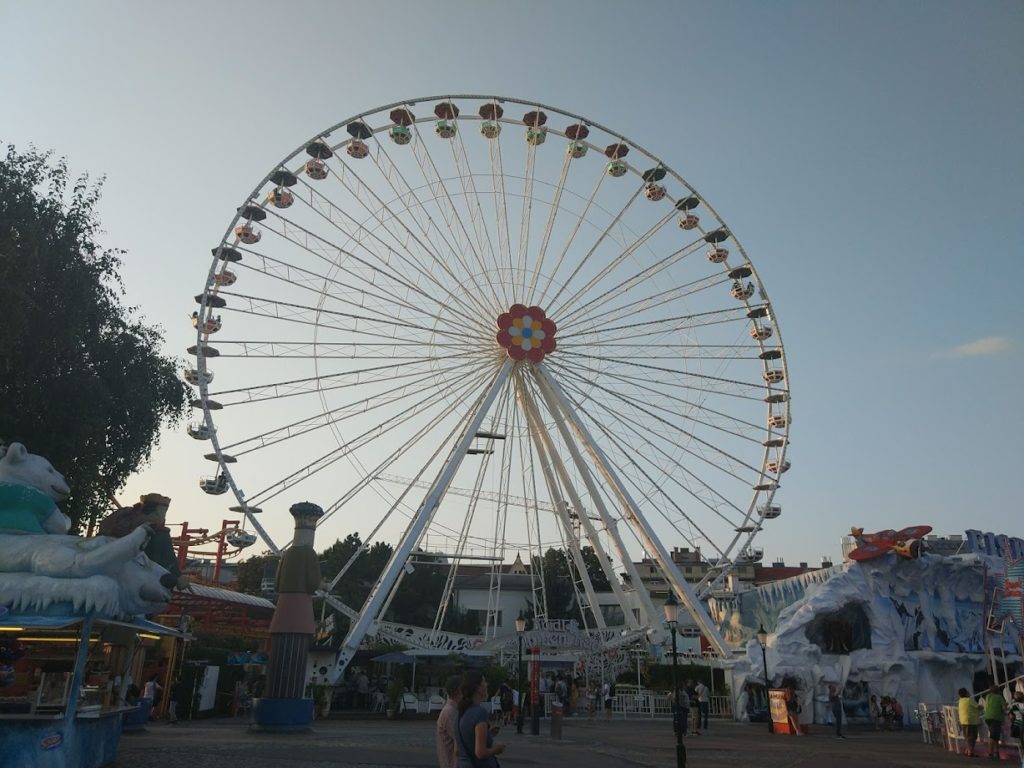
wien prater

Budapest, Hungary (197 km)

The capital of Hungary is a vibrant city that straddles the Danube River. Budapest is famous for its thermal baths, grand architecture, and buzzing nightlife. Visitors can explore the historic Buda Castle, relax in a traditional spa, or take a river cruise to see the city from a different perspective.

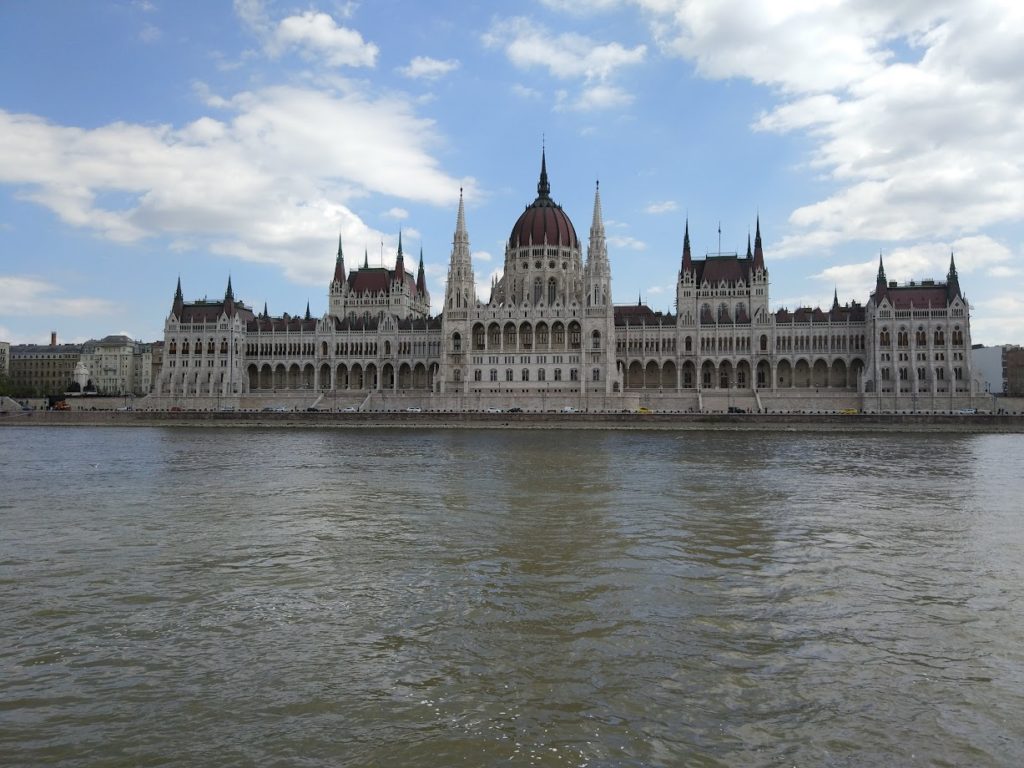
Highlights include the Fisherman’s Bastion, the Hungarian Parliament Building, the Chain Bridge, and the famous thermal baths such as Gellert and Széchenyi.

parliament in budapest

High Tatras, Slovakia (231 km)

For nature lovers, the High Tatras mountain range is a must-visit destination. The Tatras are the highest range in the Carpathian Mountains and offer stunning scenery, hiking trails, and winter sports opportunities. Visitors can stay in charming mountain towns like Tatranská Lomnica and Štrbské Pleso and explore the rugged terrain.

Brno, Czech Republic (130 km)

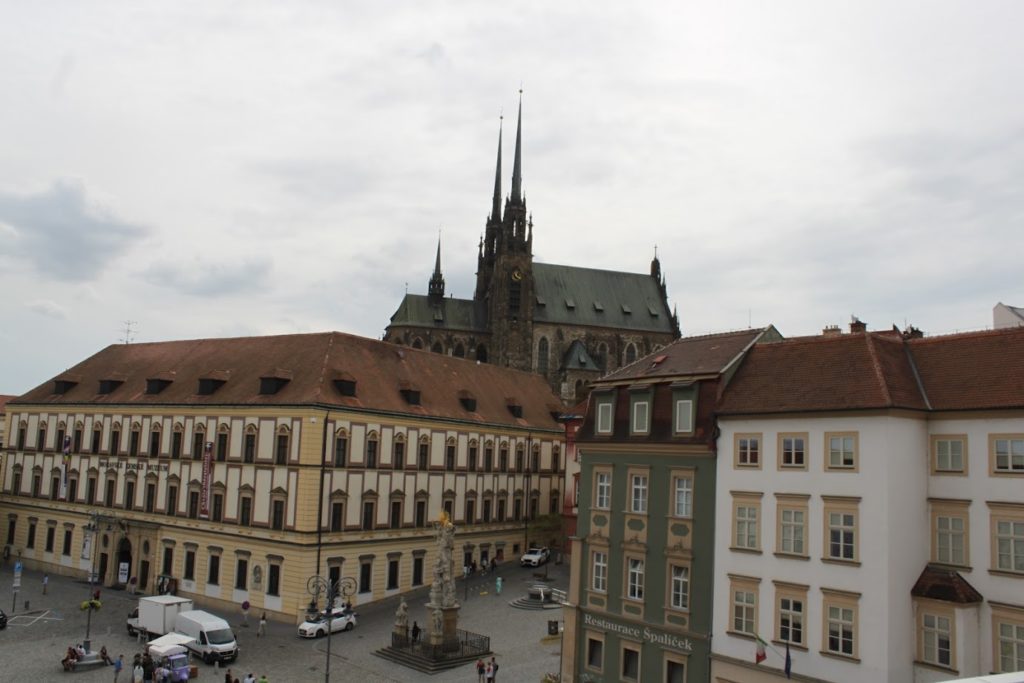
Brno is the Czech Republic’s second-largest city, known for its rich history, cultural landmarks, and vibrant atmosphere. There are plenty of things worth seeing and doing in Brno. One of the most interesting places to visit is the Spilberk Castle, a historic fortress that has been used as a prison, barracks, and now a museum. You should also take a look at Villa Tugendhat, a UNESCO World Heritage Site and one of the most important examples of modern architecture in Europe. If you come with kids, the Brno Zoo is popular, and if you like high speeds you should visit the Masaryk Circuit hosting the Czech MotoGP and other racing events.

Brno

Prague, Czech Republic (330 km)

I realize that Prague is more than 300 km from Bratislava, but it is still worth mentioning in an article like this one. The city is the capital city of the Czech Republic, and it is one of the most popular tourist destinations in Europe. It is known for its beautiful architecture, delicious food, and famous landmarks such as the Charles Bridge, the Vitus Cathedral, the Old Town square, and the Jewish quarter.

Cesky Krumlov, Czech Republic (230 km)

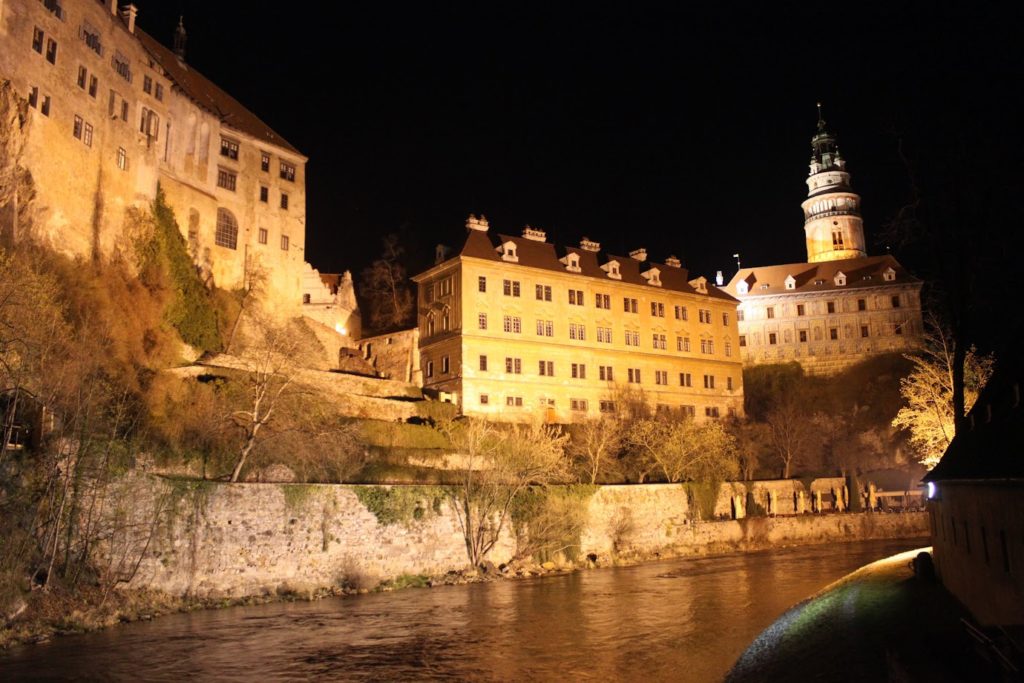
Would you like to visit a mighty little town with an awesome atmosphere in the Czech Republic? Only 230 km distance from Bratislava you will find the city of Cesky Krumlov. The city is on the UNESCO World Heritage site list and if you get there you will quickly understand why. The surrounding area might not be beautiful, but once you walk into the old town, you will stand amazed at what you see and the mighty castle surrounding a part of the center.

cesky krumlov

Sopron, Hungary (95 km)

Sopron isn’t far from Bratislava, making it a place easy to visit while in Bratislava. The city isn’t very special, but it has a very nice city center and makes it ideal if you want to taste Hungarian food and travel home able to say that you have been to Hungary during your trip to Slovakia. Some of the highlights in Sopron include the old town, the fire tower, and the Karoly lookout tower.

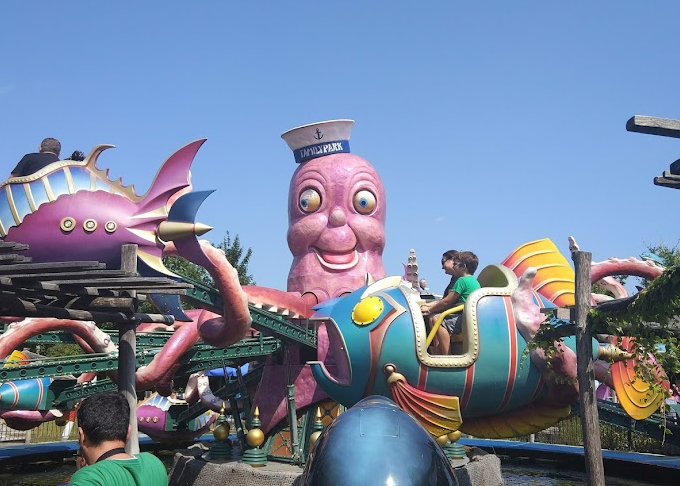
Familypark, Austria (72 km)

If you travel with kids you shouldn’t tell them about this option unless you seriously consider going there. If you tell them about it without going there, you will suffer from kids who complain a lot later. Familypark is an amusement park in Austria (not far from Bratislava). It is a fantastic place for the entire family with rollercoasters and lots of other fun things to do.The park attracts visitors from Austria, Hungary, and Slovakia every year between April and the end of October. Your kids will love you for taking them to this place!

familypark in austria

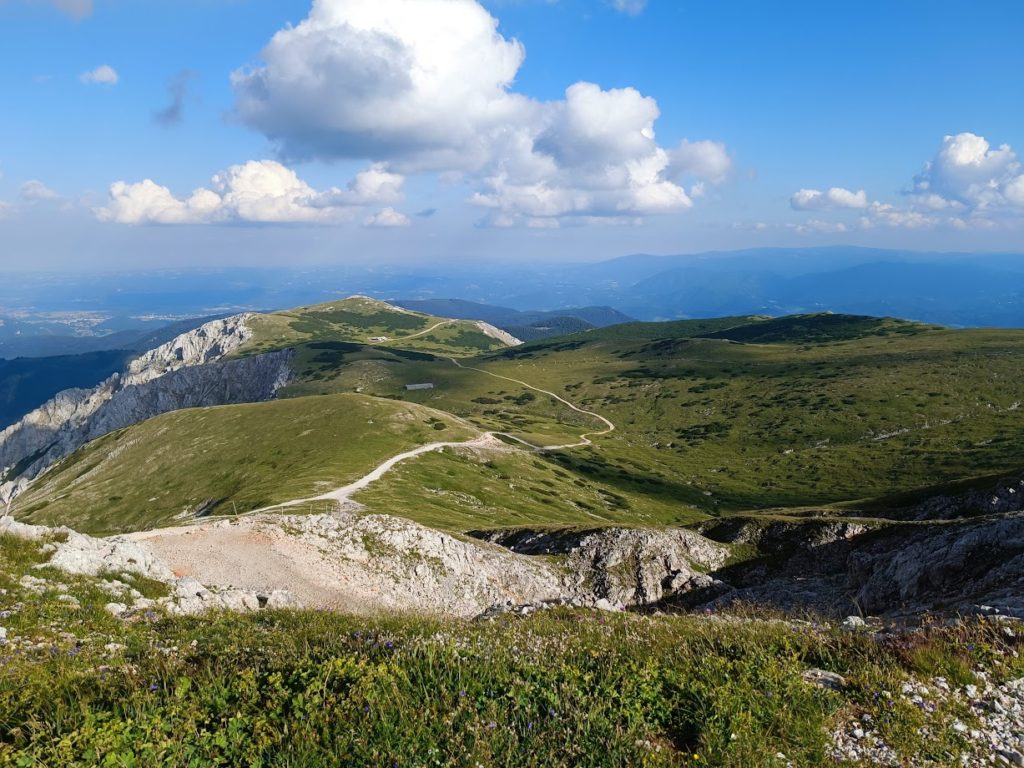
Schneeberg, Austria (170 km)

Forget about city sightseeing and shopping. Schneeberg is the place to go if you want to climb a mountain and enjoy the fresh air at above 2000 meters. You can travel to the top by train, or you can walk to the top and sleep in a cabin at the top. There are many options, but this is recommended for those who want adrenaline and a stunning view.

schneeberg

What will you do? Where will you go?

We have shared lots of ideas and suggestions for day excursions from Bratislava in this article. Which sounds most tempting to you? We would love to hear your thoughts. If you have gone to any of these places and ready to share your experience, write a comment below.